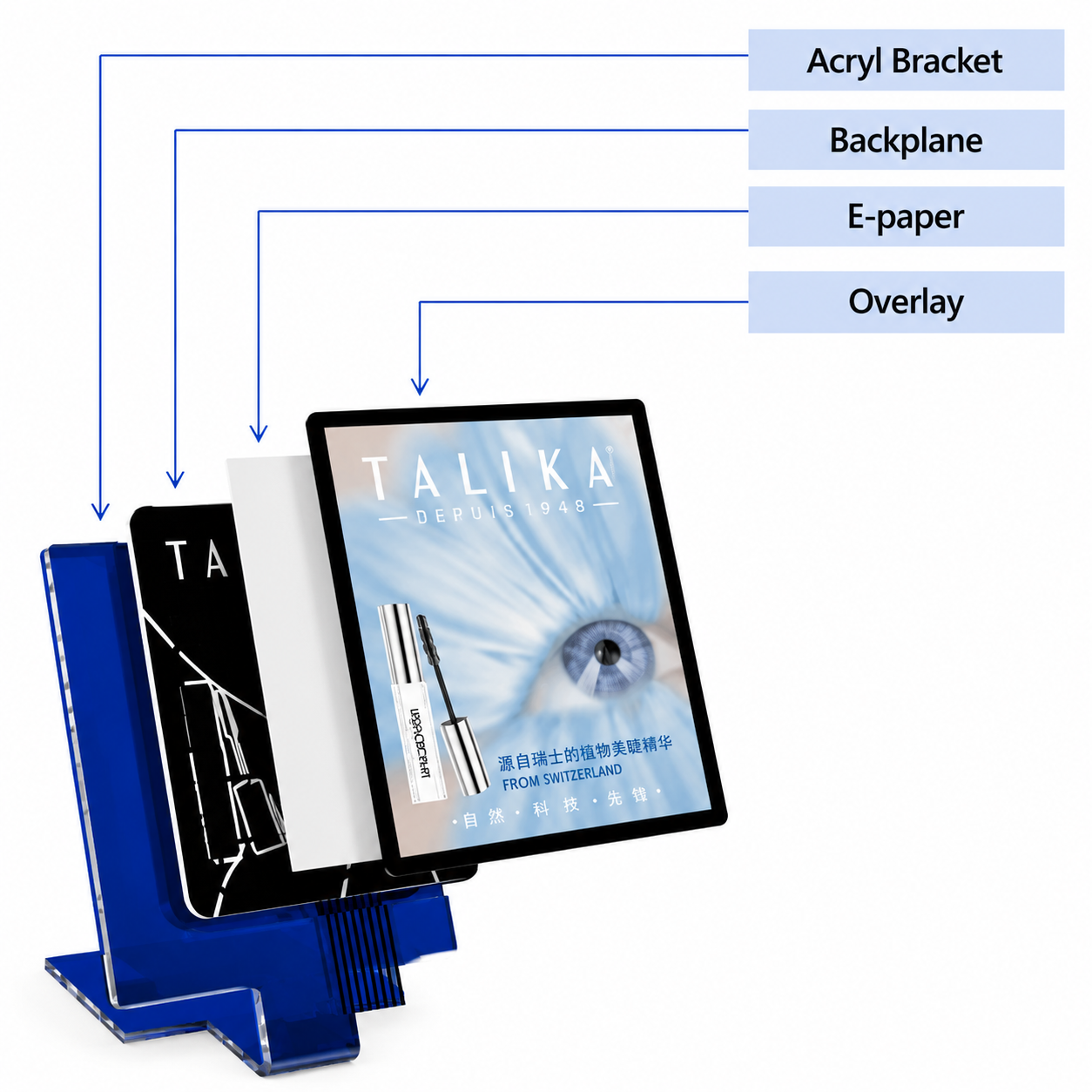
E-paper POP display structure and component breakdown

Product mechanism

How a custom E-paper POP display works

Each project starts from the product, shelf scene, artwork, and campaign goal. The display is then built as a complete unit, so the brand team receives a sample that can be reviewed before mass production.

  • Artwork and product photos define the visual direction
  • E-paper content creates simple movement or message changes
  • Battery and electronics are matched to the campaign duration
  • Clips, brackets, stands, or housings are built around the shelf condition
  • Samples are reviewed before rollout production
The goal is not to sell a fixed-size screen. The goal is to build a retail display around the campaign.

PROCESS DETAILS

These five parts turn campaign information into a retail-ready sample that buyers can review before production.

  1. 01

    Artwork and product photos define the visual direction

    Campaign artwork, product photos, logo files, and the shelf reference establish the message, proportions, and viewing priority.

  2. 02

    E-paper content creates simple movement or message changes

    The E-paper sequence is prepared around a small number of clear visual changes that can be understood quickly at the shelf.

  3. 03

    Battery and electronics are matched to the campaign duration

    The battery plan and electronics are selected for the approved sequence, expected campaign duration, and final display format.

  4. 04

    Clips, brackets, stands, or housings are built around the shelf condition

    The clip, bracket, stand, housing, or paperboard structure is developed around the real retail placement and product dimensions.

  5. 05

    Samples are reviewed before rollout production

    A physical sample is reviewed for artwork, motion, size, mounting, and packing direction before rollout production begins.